Books
Fatal Conveniences Book - Darin Olien
Fatal Conveniences Book - Darin Olien
Fatal Conveniences Book - Darin Olien

Modern life normalises illness: toxic products, polluted air, processed food, and screen addiction erode physical and mental health. Yet change is possible—choose clean products, real food, filtered water, movement, rest, and digital balance. Conscious choices restore resilience and protect against the chronic diseases of convenience.
You are the universe - Deepak Chopra
Fatal Conveniences Book - Darin Olien
Fatal Conveniences Book - Darin Olien
Consciousness underlies reality: perception co-creates the universe, challenging materialism. Quantum effects and cosmic fine-tuning suggest a participatory cosmos. Mind and matter are one field; attention shapes biology. Meditation deepens awareness, synchronicity reveals meaning, and evolution advances consciousness. Living consciously reduces fear and cultivates creativity.
The Everyday Hero - Robin Sharma
Fatal Conveniences Book - Darin Olien
The Everyday Hero - Robin Sharma
Heroism is built through daily discipline, not glory. Consistent effort shapes character across mindset, heartset, healthset, and soulset. Focus, systems, and rest sustain progress. Mastery grows through steady work and service. True heroism is calm persistence—living purposefully, reliably, and well, even when unnoticed or difficult.
Metastasis - Nafis Hasan
The Extinction of Experience - Christine Rosen
The Everyday Hero - Robin Sharma
The “War on Cancer” serves profit over cure. Drug-driven institutions neglect prevention and environmental causes while monetising survival. War rhetoric hides systemic failure. True progress demands open science, public health focus, and environmental reform to heal both people and the system profiting from their illness.
The Extinction of Experience - Christine Rosen
The Extinction of Experience - Christine Rosen
The Extinction of Experience - Christine Rosen
Christine Rosen argues that constant digital immersion reshapes daily life and erodes attention, memory and social confidence. Smartphones, feeds, GPS and virtual companions displace boredom, risk and in-person contact, weakening skills and intimacy. Tech firms design dependence, promoting ever more immersive substitutes for the physical world. She urges analogue habits, boundaries and shared offline rituals to counter these effects.
The Body Keeps the Score - Bessel Van Kolk
The Extinction of Experience - Christine Rosen
The Extinction of Experience - Christine Rosen
Trauma reshapes the brain, body, and perception, not just memory. Chronic stress disrupts regulation, embedding fear and dissociation. Healing requires safety, body awareness, and restored agency before memory work. Mindfulness, yoga, EMDR, and attuned relationships rebuild control and connection. Recovery integrates body and mind, restoring coherence and resilience.
George Orwell - Nineteen Eighty-Four
Healing the Shame that Binds You - John Bradshaw
George Orwell - Nineteen Eighty-Four
Orwell’s 1984 portrays a totalitarian state where surveillance, propaganda and thought control crush individuality. Winston Smith’s small rebellion against the Party shows how language, history and fear are manipulated to erase truth, dissolve private life and render political tyranny permanent.
George Orwell - Animal Farm
Healing the Shame that Binds You - John Bradshaw
George Orwell - Nineteen Eighty-Four
Animal Farm is an allegory of a farmyard revolt that replaces one tyranny with another. The animals overthrow humans for equality, only to see the pigs become authoritarian. It illustrates how power corrupts, how ideals are manipulated, and remains a clear warning about political control, propaganda, and failed revolutions today.
Healing the Shame that Binds You - John Bradshaw
Healing the Shame that Binds You - John Bradshaw
Healing the Shame that Binds You - John Bradshaw
Toxic shame turns mistakes into judgments of the self, driving secrecy, rigid control, and compulsive behaviour. It often begins in shaming families or cultures and passes between generations. Recovery comes from recognising the pattern, setting boundaries, addressing early wounds, and softening the inner voice, restoring self-respect, healthier relationships, and emotional stability.
No Bad Parts - Richard Schwartz
No Bad Parts - Richard Schwartz
Healing the Shame that Binds You - John Bradshaw
No Bad Parts, by Richard Schwartz, presents the Internal Family Systems view that the mind is made up of distinct parts, all seeking to protect us, even when they cause harm. It shows how meeting these parts with curiosity instead of shame can relieve trauma, soften extreme behaviours, and restore a grounded, compassionate sense of self.
IMPACT - Ronald Cohen
No Bad Parts - Richard Schwartz
LET THEM - Mel Robbins
Ronald Cohen’s IMPACT argues that capitalism must account for risk, return and impact together. It explains impact investing, outcome-based funding and impact-weighted accounts, influencing policymakers, investors and businesses to measure social and environmental effects in financial decisions and to embed impact into mainstream capital markets.
LET THEM - Mel Robbins
No Bad Parts - Richard Schwartz
LET THEM - Mel Robbins
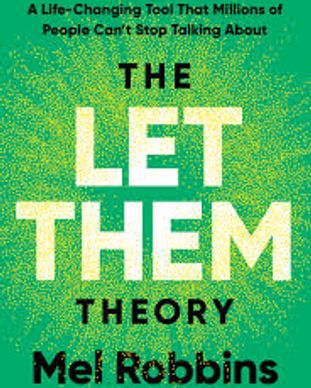
In The Let Them Theory, Mel Robbins argues that trying to control others causes unnecessary stress. The key is to "let them" be themselves while you focus on "let me": controlling your own reactions. This mindset shifts energy from frustration to personal empowerment, emotional peace, and reclaiming your agency.
The Monk Who Sold His Ferrari - Robin Sharma
The Monk Who Sold His Ferrari - Robin Sharma
The Monk Who Sold His Ferrari - Robin Sharma
A burned-out lawyer suffers a heart attack, abandons his luxury life, and returns from India with a disciplined philosophy for living. Through a parable, the book sets out practical habits for mastering the mind, protecting time, simplifying, building character, and defining success as health, purpose, and service - not status.
A New Earth - Eckhart Tolle
The Monk Who Sold His Ferrari - Robin Sharma
The Monk Who Sold His Ferrari - Robin Sharma
A New Earth argues that most suffering comes from identification with the ego - the voice of thought that seeks control, status, and separation. Freedom begins by observing thoughts rather than obeying them. By practising presence, letting go of compulsive narratives, and acting from awareness, you reduce conflict and live with greater peace and clarity.
Seat of the Soul -
The Monk Who Sold His Ferrari - Robin Sharma
Seat of the Soul -
The Seat of the Soul argues that your deepest identity is the soul, not the personality. Real growth comes from aligning choices with love, truth, and responsibility, rather than fear and control. It reframes relationships, intention, and pain as opportunities to learn, mature emotionally, and develop authentic power grounded in compassion.
Podcasts
David Ghiyam
Know Thyself Podcast
Know Thyself Podcast
David Ghiyam teaches spiritual wisdom and business consciousness through courses, live events, and a podcast, guiding people toward transformation, impact, and soul-aligned leadership.
Know Thyself Podcast
Know Thyself Podcast
Know Thyself Podcast
Know Thyself is André Duqum’s long-form podcast exploring consciousness, spirituality, health, and human potential through in-depth conversations with scientists, sages, and creators. Aimed at practical self-knowledge and growth, it blends perennial wisdom with modern inquiry, hosting guests such as Sadhguru, Gabor Maté, and Donald Hoffman.
Mel Robbins Podcast
Know Thyself Podcast
Mel Robbins Podcast
The Mel Robbins Podcast is a self-improvement show focused on mindset, habits, confidence, anxiety, relationships and productivity. It mixes research-backed psychology, practical tools and personal stories. Listeners use it to build better daily routines, manage stress, change behaviour, and feel more in control of their lives.
Influential Figures
Margaret Thatcher
Margaret Thatcher
Margaret Thatcher
Margaret Thatcher believed in free markets, limited government, self-reliance, and personal ownership. She held that prosperity arises from enterprise, competition, and fiscal discipline, not state control. Applied today, her principles affirm that stable money, low taxes, and accountable leadership remain essential for economic growth and individual freedom.
Ronald Reagan
Margaret Thatcher
Margaret Thatcher
Ronald Reagan stood for limited government, free enterprise, and individual liberty. He believed economic growth comes from reducing taxes, curbing regulation, and trusting people over bureaucracy. His principles remain relevant today: empowering citizens, encouraging entrepreneurship, and maintaining strong national confidence grounded in personal responsibility and fiscal prudence.
Winston Churchill
Margaret Thatcher
Winston Churchill
Winston Churchill championed national sovereignty, parliamentary democracy, and steadfast resistance to tyranny. He believed in duty, courage, and sacrifice in defence of country and civilisation. He valued tradition, the rule of law, and constitutional monarchy, while supporting free enterprise tempered by social responsibility. His outlook stressed moral resolve, strategic patience, and unshakeable confidence in victory, even in dark times.
Gandhi
RFK and MAHA
RFK and MAHA
Mahatma Gandhi believed in non-violent resistance, personal sacrifice, and moral courage in the struggle for justice and national self-rule. He stressed truth, self-discipline, and simple living, seeking political change through peaceful pressure, local self-reliance, and the awakening of individual conscience rather than hatred or revenge.
RFK and MAHA
RFK and MAHA
RFK and MAHA
Robert F. Kennedy Jr.’s Make America Healthy Again (MAHA) campaign promotes prevention over prescription. It targets chronic disease through clean food, reduced chemical exposure, and natural health. His vision stresses environmental responsibility, corporate accountability, and the belief that true national strength begins with individual wellbeing.
JFK
RFK and MAHA
Milton Friedman
John F. Kennedy was the 35th US president (1961-63). He championed civil rights, space exploration, and a tougher Cold War stance. Politically, he influences modern liberalism, activist government, image-driven campaigning, and ideals of public service encapsulated in “ask not what your country can do for you”.
Milton Friedman
Milton Friedman
Milton Friedman
Milton Friedman (1912–2006) was an American economist of the Chicago School. He championed free markets, monetarism, limited government, floating exchange rates, school vouchers, and argued inflation is a monetary phenomenon and that economic freedom underpins political freedom.
Thomas Sowell
Milton Friedman
Thomas Sowell
Thomas Sowell advocates for individual responsibility, free markets, and empirical truth over ideology. He argues that incentives, not intentions, shape outcomes, and that culture and education drive progress more than government intervention. His work endures as a defence of realism, merit, and evidence-based economic thinking.